
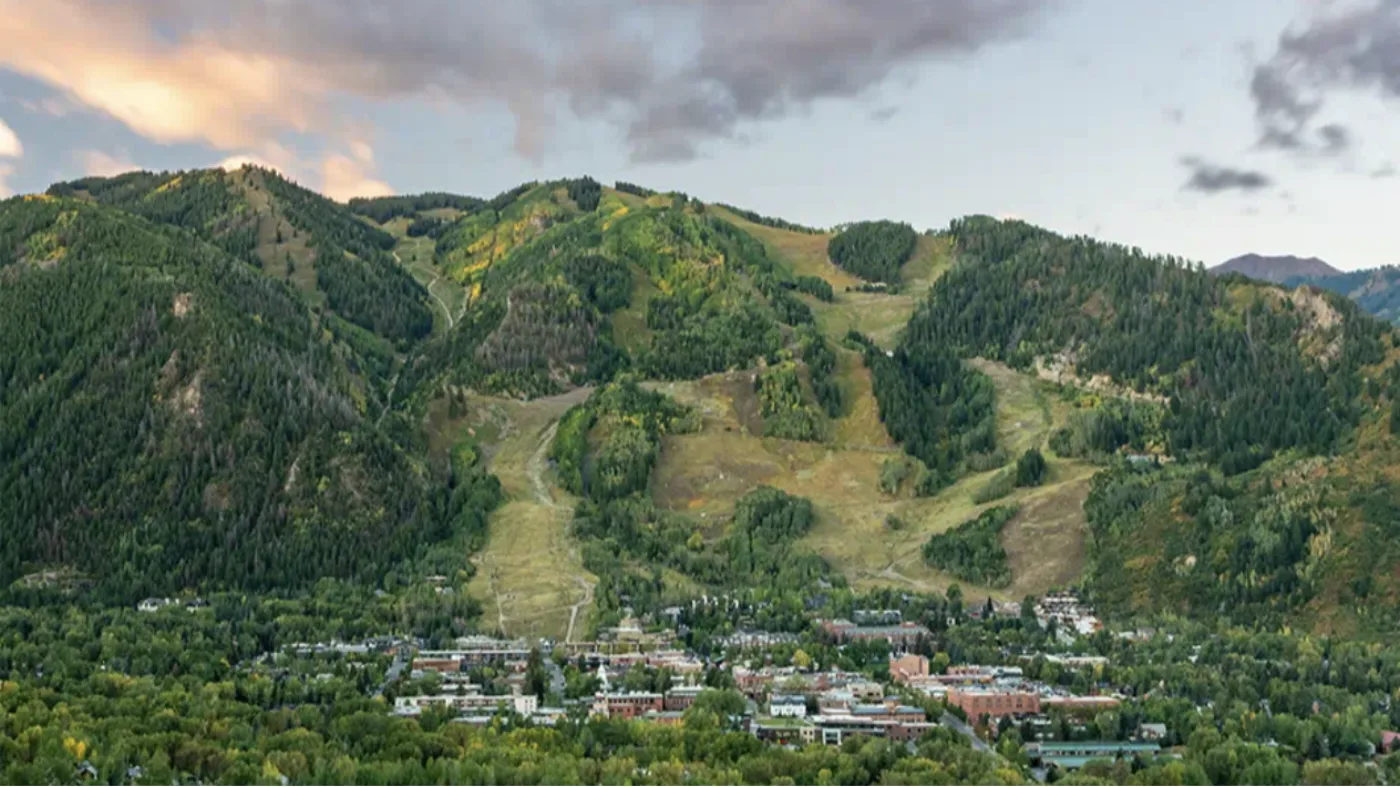
Resilience Over Perfection: Navigating Aspen's New Landscape with Curiosity and Grace
For the first time since Aspen adopted its drought mitigation plan in 2020, the city has officially entered Stage 3 water restrictions — the most stringent tier in the plan, and a clear signal of how profoundly conditions have shifted across the Roaring Fork Valley.
This is not a blip. The snowpack in the Roaring Fork Watershed closed out 2025 at just 53% of normal—the lowest average in a decade—and most of Eagle and Pitkin counties have been classified under extreme or exceptional drought conditions. We are not managing a temporary inconvenience. We are beginning to understand what the long-term landscape of life at altitude in a warming West truly looks like.
And here is the thing: we think that's worth approaching with curiosity, not dread.
It's easy to draw parallels between Aspen and the communities of Malibu and Pacific Palisades—beautiful homes nestled into nature, where the landscape is expected to reflect the same thoughtfulness as the architecture, and where residents understand the importance of investing in the land around them.
Those communities have been grappling with the same questions we are now asking ourselves — how to maintain landscapes of genuine beauty under tightening water restrictions, how to adapt gracefully when the environment demands it, and how to invest wisely in land that is changing. The January 2025 wildfires made the stakes impossible to ignore. Before the fires, the region had seen nearly zero rainfall since the previous May, and scientists described the air, soil, and vegetation across seven Southern California counties as critically depleted of moisture.
The lesson the landscape industry absorbed there was not simply "use less water." It was something deeper: the old model of landscape — lush, green, water-hungry, and aesthetically conventional — is no longer suited to the environment we live in. Architects and landscape professionals in those communities are now designing around drought-tolerant native species, defensible spacing, and drip irrigation as foundational choices rather than afterthoughts. Firewise landscapes, they've found, can still be rich, layered, and beautiful — they simply require intention.
We believe Aspen is at exactly that inflection point now.
A healthy landscape is not one that maintains an artificial appearance during a drought. A healthy landscape is resilient — it has strong root systems, biologically active soil, and the capacity to recover when conditions improve. That distinction is guiding every decision we make this season.
As temperatures rise this month, some landscapes will show visible signs of stress. Turf areas exposed to intense afternoon sun and shallow soils will be among the first. Annual flower programs may need to be reconsidered. Certain plants will naturally go dormant during peak heat.
We want to say this directly: that is not failure. That is the landscape responding honestly to its environment.
Behind the scenes, we are moving forward with the same intention — stewarding the landscapes we care for through whatever the season brings. A true steward doesn't tend the land only when it's easy; they tend it especially when it isn't. We are working with each property to identify its opportunities and to begin the larger conversation about how to bring it into a new era — one defined by less water, but no less beauty.
A New Aesthetic Is Already Emerging — and It's Beautiful
Here is what genuinely excites us as landscape professionals: the plants that thrive in our new conditions are extraordinary.
Colorado natives like blue grama grass, Rocky Mountain columbines, prairie smoke, silvery lupine, and windflower are not consolation prizes. They are deeply beautiful, ecologically generous, and — once established — remarkably self-sufficient. They support pollinators. They move in the wind. They shift color through the seasons in ways that a monoculture lawn never could.
Deep, infrequent watering encourages root systems to grow downward, where soil moisture is more stable — creating plants that are genuinely independent rather than irrigation-dependent. Clustering plantings together creates shared microclimates that reduce evaporation and shade the soil. Mulch, applied generously, does more work per dollar than almost any other single intervention.
What we are describing is not a lesser version of the Aspen landscape. It is a truer one — something that belongs here, that reflects this specific altitude, this specific light, these specific conditions.
Southern California didn't choose to reimagine its relationship with water. It was compelled to — by drought, by fire, by loss. We have a different opportunity here in the Roaring Fork Valley: to make those choices thoughtfully, early, and with a genuine sense of possibility.
Aspen has always known how to hold beauty and wildness in the same frame. The mountains surrounding us do not apologize for their harshness — they are magnificent because of it. The landscapes we tend can carry that same quality.
This season is not about perfection. It is about protecting what matters most, making decisions rooted in long-term health over short-term appearance, and — if you're willing — allowing a little curiosity about what becomes possible when we stop fighting the environment we're actually in.
Resilience, it turns out, looks a lot like showing up — with intention, with care, and without apology.